


Please Leave Us A Message
Privacy statement: Your privacy is very important to Us. Our company promises not to disclose your personal information to any external company with out your explicit permission.
 Shanghai Healpoint Industrial Development Co. LTD
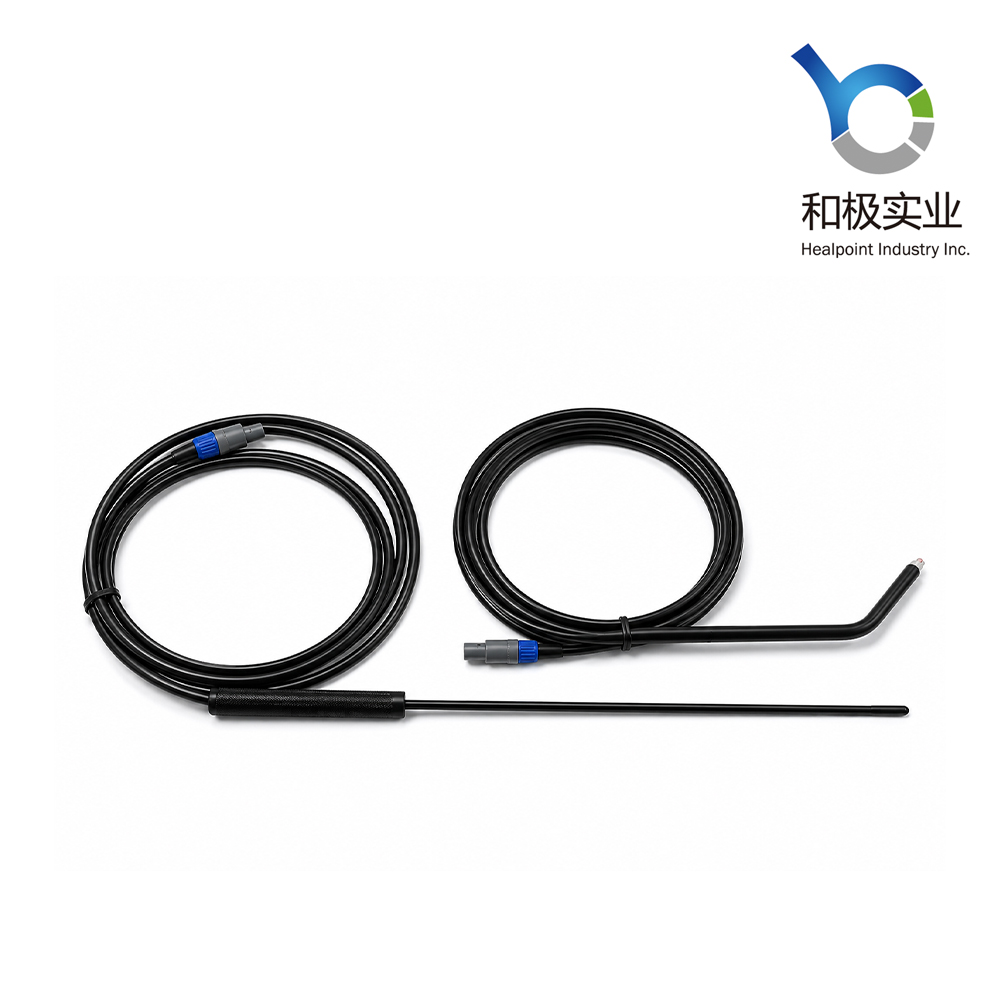
Compatibility is a connector-and-function question, not a brand-loyalty question. Before you qualify a replacement Radiofrequency Monopolar Surgical Electrode, confirm the plug geometry, the pin count and the applied-part rating against the generators already installed in your ORs. This 2026 matrix turns scattered interface notes into a searchable grid that a distributor can check line by line. Healpoint builds the mapping from published interface tables and IFUs, then asks buyers to verify each row against their own equipment list.
Start from the generator socket, because every accessory decision flows from it. Interface data for this category is fragmented across adapter product pages and instructions for use rather than collected in one place. A 4 mm plug is a common baseline, but it is far from universal. Valleylab and Medtronic units use a 3-pin 4 mm arrangement that became a de facto reference; Bovie and Symmetry office systems use a single-pin 8 mm socket; Erbe VIO and ICC platforms use a coaxial 5/9 mm connection; and Olympus ESG-400 generators rely on a proprietary 7-pin plug. Treating any one of these as "standard" is the fastest route to a cart full of accessories that will not seat.
| Generator family | Native connector | Typical accessory fit | Notes for buyers |
| Valleylab / Medtronic | 3-pin, 4 mm | Monopolar handpiece, return pad | De facto reference; many third-party plugs copy it |
| Bovie / Symmetry | 1-pin, 8 mm | Office-based probes | 8 mm does not seat in a 4 mm socket |
| Erbe (VIO, ICC) | Coaxial, 5/9 mm | Coagulation clamp, APC probe | Adapt or use a coaxial cord |
| Olympus (ESG-400) | 7-pin proprietary | Saline resection sets | Proprietary; confirm mode support in writing |
Teams cataloguing Surgical Consumables across several theatres should record the socket type per room, because a single 4 mm assumption rarely survives contact with a mixed fleet. Capture the generator make, model and socket photo for every unit, then map each accessory SKU to that list. Add the applied-part classification at the same time: Type BF and Type CF under IEC 60601-1 are not interchangeable labels, and a cord rated for one should not be assumed safe on the other. ASTM F2135-22 is a useful reference to ask about when a vendor claims a plug is "universal".
✅ Data points to log per room:
Ask each supplier to state the applied-part rating and supported modes in writing, not only on a catalogue page. Healpoint keeps the grid restricted to interface facts found in IFUs and published tables, so buyers can re-check any row against their own equipment.
✅ Bottom line: Build the grid from the socket outward; a plug that merely fits tells you nothing about the pin map.
A plug that fits is not the same as a function that works. Physical seating is only the first gate. Several generators run auto-recognition of the attached accessory, saline verification for resection modes, or contact-quality monitoring of the return pad. Those functions can fall silent when a third-party cord is introduced, because the handshaking happens through pins and impedance that a generic plug does not reproduce. Published interface notes and IFUs that name compatible generator models, such as universal active cords listing VIO 300 D and Force 2, are the safe template: ask for the same model-level statement for every device you intend to mix.
Adapters are a legitimate bridge, but each one is an extra SKU and an extra failure point. ConMed B210 and A238 parts, FIAB F4830-series adapters, and universal active cords exist precisely because fleets are mixed. Use an adapter when a small number of legacy units must be supported during a transition, and insist on its own IFU, its own inspection point and a documented check that the applied-part rating survives the chain. Prefer a native cord or a standardised plug when volume is high and many sockets are involved, because a drawer of adapters becomes an inventory and training problem long before it becomes a clinical one.
Healpoint recommends resolving mode support in writing before an order is placed, because a returned cord costs more than a day of checking. For an OEM program, buyers working with Shanghai Healpoint Industrial Development Co., Ltd. can request a documented connector schedule that fixes the plug, the pin map and the applied-part rating for each model. Cable length and insulation integrity also matter under IEC 60601-2-2, so do not shorten or extend a lead without re-checking the report that covers it.
When a Bipolar Coagulation Forceps is moved onto a different generator through an adapter, confirm that the twin-jaw sensing and low-voltage mode still behave as the IFU describes. A twin-jaw instrument that coagulates but stops reporting impedance has quietly lost a safety feature, even though the plug fits. Healpoint treats the adapter decision as a controlled change, not a field workaround, and asks buyers to record who signed off on the mode check.
✅ Bottom line: Confirm mode support and applied-part rating in writing; an adapter adds a failure point you must own.
Q: Does a 4 mm plug guarantee it will work on every generator? A: No. A 4 mm plug is a common geometry, but pin count, active-pin assignment and applied-part rating still vary, so confirm the exact socket on each installed unit.
Q: We buy in bulk for several theatres; is one adapter per room acceptable? A: It can be, but treat each adapter as a separate SKU with its own IFU and inspection point, and verify mode support in writing before rollout.
Q: Can Healpoint map our fleet to the right cord? A: Yes. Share the generator brands and models you run and we will return a verifiable interface matrix to check against each room, so wholesale orders arrive against a confirmed socket list.
Send Healpoint the generator brands, models and socket photos from each theatre, and we will return a custom interface matrix mapping connector, pin count and applied-part rating to each device family. Replace every row with your own tender quotes and the vendor's current IFU before you commit, since the mapping is illustrative only. A confirmed socket list cuts down mis-orders and costly returns.
Mobile: +86 15021310098
Email: ysy1107@hotmail.com
Website: www.healpointshanghai.com
Email to this supplier
Privacy statement: Your privacy is very important to Us. Our company promises not to disclose your personal information to any external company with out your explicit permission.
Fill in more information so that we can get in touch with you faster
Privacy statement: Your privacy is very important to Us. Our company promises not to disclose your personal information to any external company with out your explicit permission.